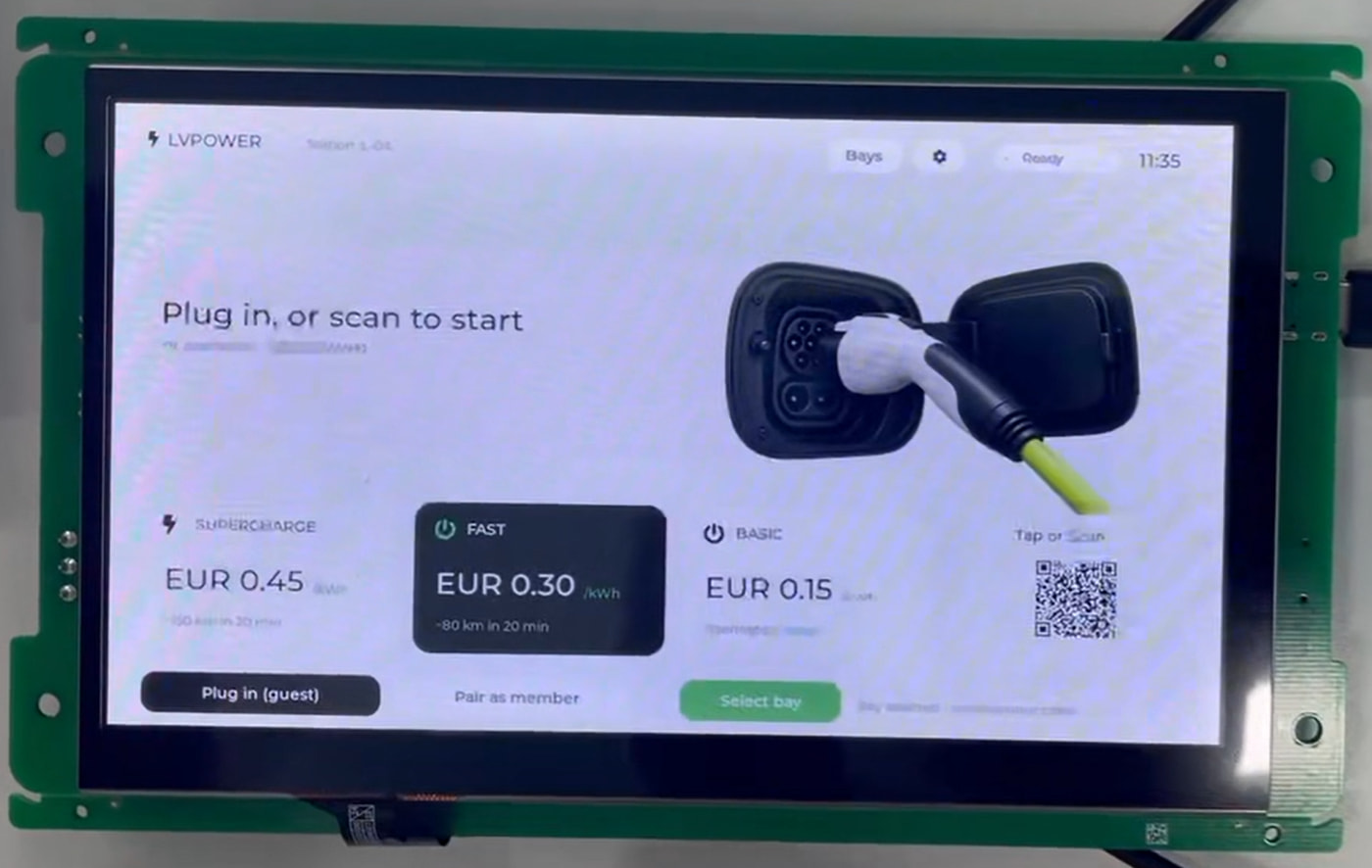
I’ve been testing a workflow for taking an HMI from an early UI design to real embedded hardware.
The current flow is roughly:
Idea / sketch → requirements → interaction & state → Figma → LVGL → hardware
The interesting part is not generating LVGL code itself. Tools already exist for that.
The harder part is keeping the UI structure, interaction logic, state model and hardware bindings consistent when moving from design into an embedded project.
We now have this flow running on real ArtInChip hardware, and I’d like to test it with more real-world HMI cases.
I’m especially interested in projects where:
-
the UI already exists in Figma or as a sketch
-
the target uses LVGL
-
there are buttons, states, sensor values, GPIO, Modbus, MQTT or similar bindings
-
the goal is a working prototype on real hardware
I’m not trying to replace normal LVGL development. The goal is to reduce the repetitive work between UI design and embedded implementation.
If anyone has a small HMI project or UI that would make a good test case, I’d be happy to try it and share what works — and what still needs manual engineering.
OpenHMI Network: openhmi.network